Personalized Search Is Growing: What It Means for Business Visibility in 2026
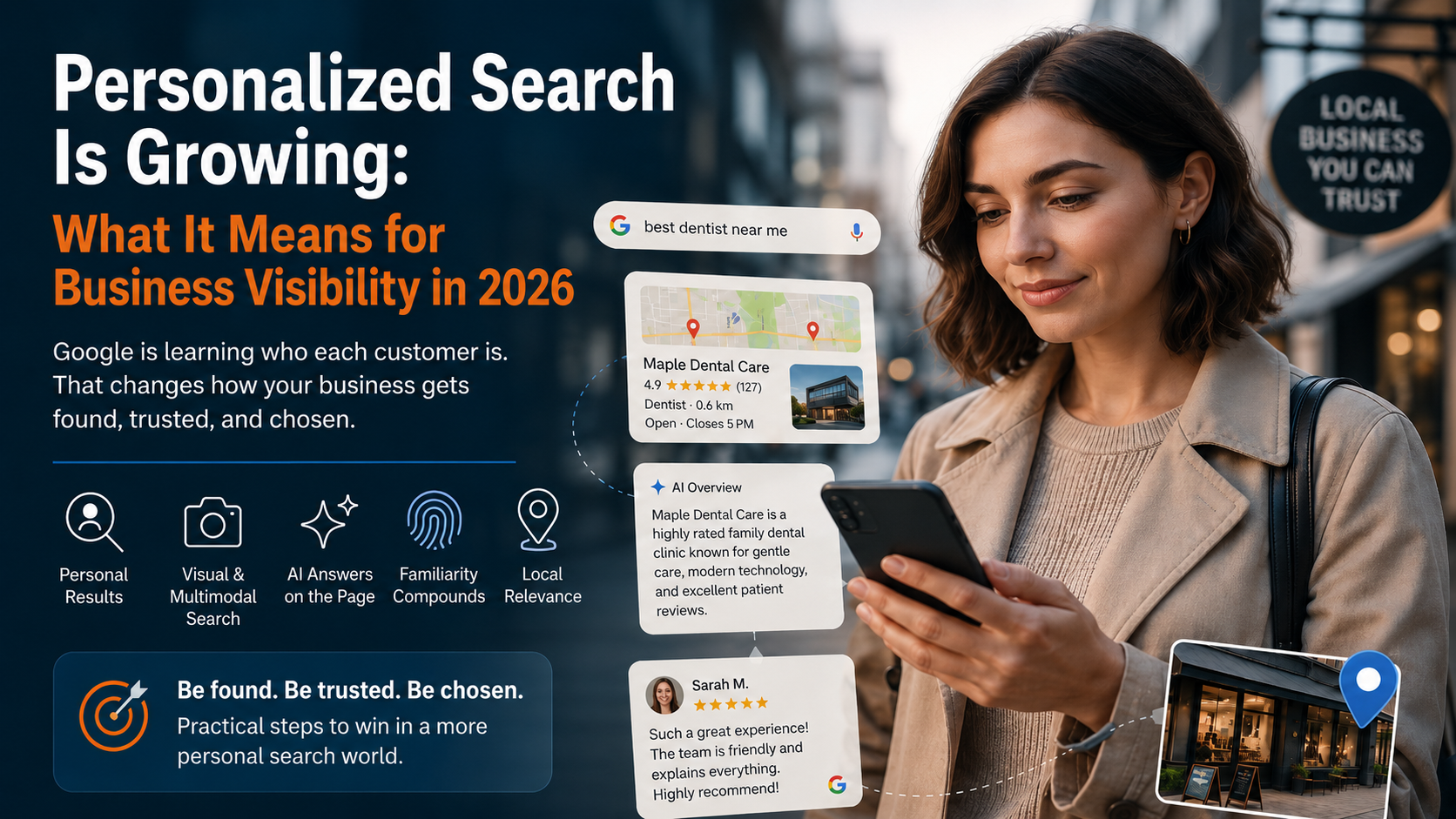
Google is learning who each customer is. That changes how your business gets found, trusted, and chosen. Here is the plain-English guide for independent business owners.
Search used to feel fair. Type the words, get the ten links, fight for a good spot. Everyone saw roughly the same page.
That world is fading.
Google is now building a search that knows the person using it. What they searched before. What they tapped. What they photographed with their phone. The result is simple to say and big to deal with: two customers can search the same thing and see different businesses.
This guide pulls the whole picture together. What is changing, what it means for getting found, and what to actually do about it. We will keep it clear, and we will be honest about what is confirmed versus what is a fair read of the direction.
What sparked this
In 2026 Google emailed millions of people about new search settings. It split the old “Web & App Activity” into Search Services History and Personalized Recommendations, and added a setting that saves the images, audio, and video people use through tools like Google Lens.
On its own, this is a privacy and settings update. It did not change rankings. We break the email down in full here: Google’s new search history settings, what changed and what didn’t.
But the email is a window. Look through it and you see where Google is going.
Five shifts you can feel coming
1. Personal results replace one shared result
Google can now remember and use a person’s search history, where they allow it. Pair that with Google’s AI features, which tailor answers using past searches and opted-in context, and the single shared results page starts to break apart.
Your rank tracker checks one clean version of Google. Your customer sees their own. The two drift apart.
2. Search is now visual and stoken
People search by snapping a photo, talking to their phone, and pointing a camera at things. Typed words are only part of it now. That is why Google is saving media in the first place.
If your only assets are stock photos and text, you are missing half the room.
3. AI answers the question on the page
Ask Google something and you often get a written answer up top. The customer may learn what they need and never click.
Google has been clear that its AI answers run on the same Search basics. Your page still needs to be indexed and good enough to be picked. The change is that being seen no longer always means being visited.
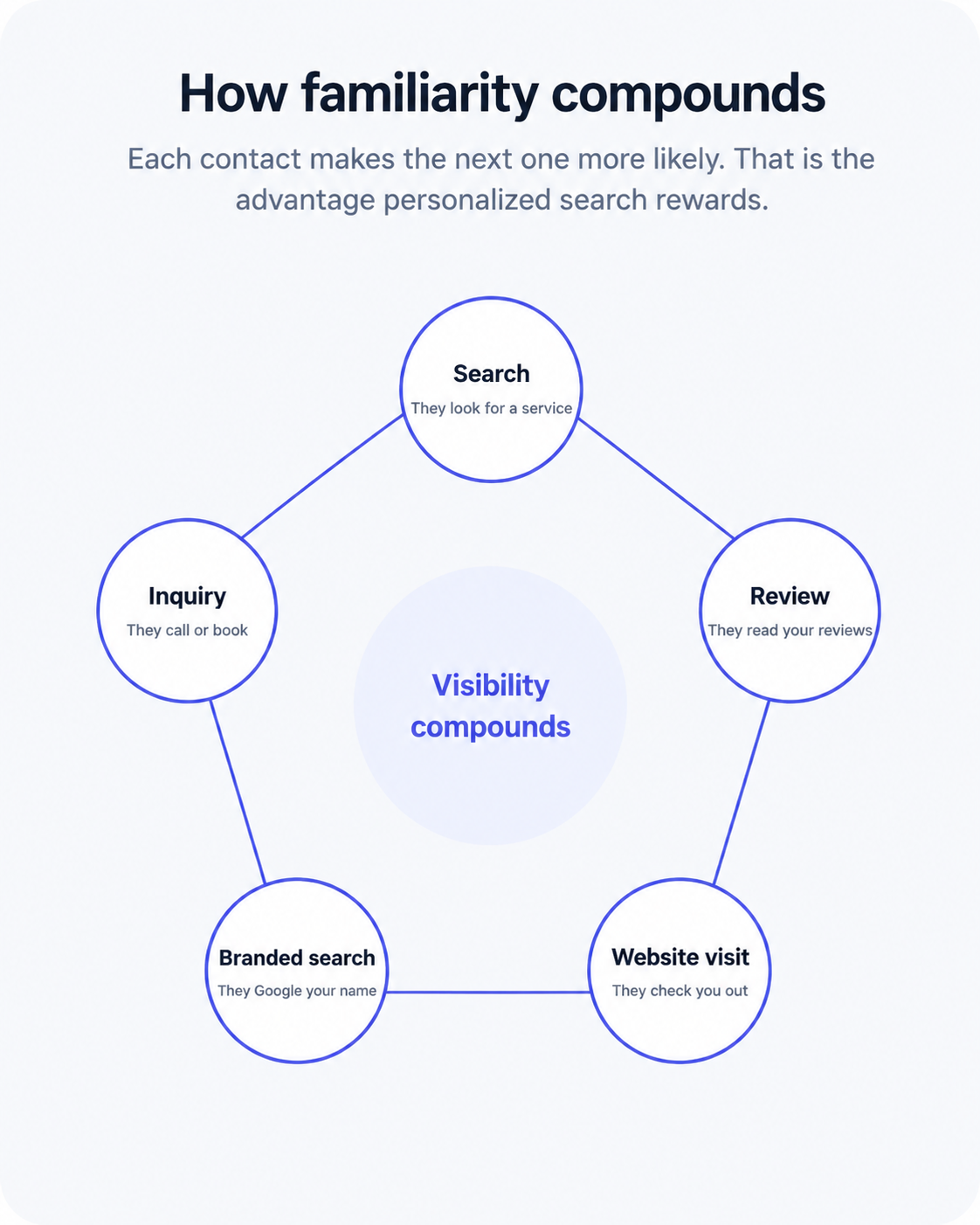
4. Familiarity compounds
Here is the pattern that matters most for a smaller business.
When a customer has met you before, visited your site, read a review, watched a clip, Google has more reason to show you again. One good first contact feeds the next.
Search → review → website visit → branded search → enquiry.
Each step makes the next more likely. Big brands already enjoy this loop because they generate more searches and mentions. Smaller businesses have to earn that first meaningful contact. We treat this as a fair reading of the direction, not a confirmed Google ranking rule.
5. Personal search can lift the specialist too
Here is the other side, and it comes from Google itself. The head of Google Search, Liz Reed, argues that personalization can help smaller businesses rather than only big ones. Her point: when someone types a couple of generic words, everything looks the same, and the familiar names win by default. When Google knows the person, and they say what they actually want, it can surface the specialist who was hard to match before. The eco-friendly maker. The local expert.
So personal search cuts both ways. It can compound a big brand's lead, and it can put a focused small business in front of the exact people who want it. The deciding factor is the same either way: whether you are distinctive enough to be worth surfacing. Personalization rewards the specialist and quietly passes over the generalist.
What this means for you
The old goal was a ranking. The new goal is wider: be found, understood, trusted, and chosen across a journey that bounces between maps, reviews, AI answers, images, and your site.
A few honest consequences:
“We rank number three” tells you less than it used to.
You can gain exposure in an AI answer or a map and still see flat website visits. Both are real, so measure both.
The business most at risk is not the one ranking a little lower. It is the one that looks the same as everyone else, is barely remembered, and shows up in only one place.
For why this breaks the usual SEO report, read why your SEO report may be hiding half the story.
What to do about it
You do not need to chase every Google update. You need to become a business that personal search has good reason to pick. Five moves do most of the work.
1. Help Google understand your business. Clear pages for each service. Consistent name, address, and phone everywhere. A complete Google Business Profile.
2. Earn the first contact. Get into the places customers look before they pick: reviews, local “best of” lists, trade directories, YouTube, and helpful posts that answer real questions.
3. Build branded demand. Give people a reason to search your name. Distinctive opinions, a named way of working, honest content people remember. Watch your branded searches grow in Search Console.
4. Say something only you can say. Swap generic advice for first-hand proof: real projects, honest pricing, before-andeafter results, lessons from the job.
5. Measure what pays. Track calls, bookings, and direction requests, not just rank and traffic.
Want the hands-on version? Work through our 10-part Search Visibility Checklist for independent businesses.
The shift, in one line
Search is no longer only about getting a page ranked. It is about making sure your business can be found, understood, trusted, and chosen as the search journey gets more personal.
That is the work. And it rewards the businesses willing to be distinctive, useful, and easy to find in more than one place.
See where you stand
Two simple next steps.
Free: download the Search Visibility Checklist and score yourself in an afternoon.
Done for you: request a Search Visibility Snapshot. We review five areas, from how new customers find you to whether your search presence turns into inquiries, and send back the three to five fixes worth making first.
Search keeps changing. Being the obvious, trusted choice never goes out of style.